
Throughout football history, many rules have been tested to make knockout matches more exciting. One of them was the silver goal rule, a format that existed only briefly but created memorable moments in European competitions. So, what is the silver goal rule, how was it applied, and why was it quickly abolished?
Today, when watching truc tiep bong da hom nay on Vebo, fans mainly see tied knockout matches settled by two full periods of extra time, followed by a penalty shootout. However, football in the early 2000s operated under a completely different mechanism.
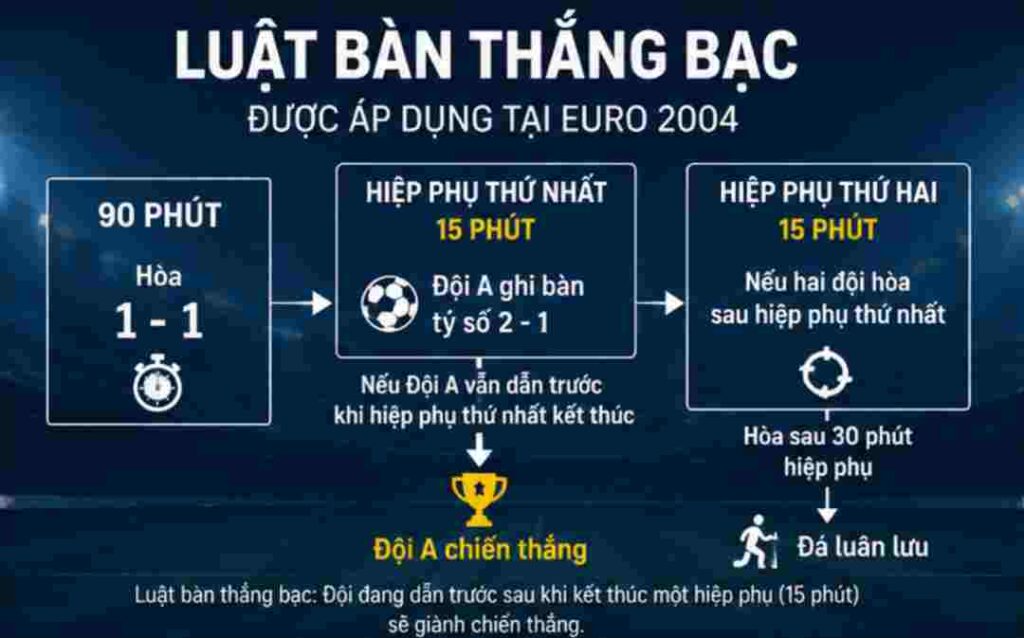
A diagram summarizing the silver goal rule, helping viewers easily understand how winners were determined in extra time
What Is the Silver Goal Rule?
Put simply, the question of what the silver goal rule is refers to a method of deciding the winner during extra time. Under this rule, if one team was leading at the end of the first period of extra time, the match ended, and the team in front was declared the winner.
Unlike the golden goal rule, the match did not end immediately after a goal was scored. The trailing team could continue playing until the end of the first period of extra time to search for an equalizer. If the score was level after the first 15 minutes of extra time, the teams moved on to the second period.
If the score remained level after the full 30 minutes of extra time, the teams had to take part in a penalty shootout. Therefore, when learning what the silver goal rule is, fans should remember that the decisive moment came at the end of the first period of extra time, not immediately after a goal was scored.
UEFA introduced this rule in its competitions with the aim of balancing drama with an opportunity to recover. The silver goal rule made its debut in the 2003 UEFA Cup final between Porto and Celtic and was later used at EURO 2004.
Through Về Bờ TV, viewers today can rewatch historic matches to better understand the differences between the old rule and the modern extra-time format.
How the Silver Goal Rule Was Applied in a Match
To understand exactly what the silver goal rule is, imagine a knockout match that ended 1-1 after 90 minutes. The teams then had to play two periods of extra time, each lasting 15 minutes.
If Team A scored in the 95th minute, the match still continued until the end of the 105th minute, including stoppage time. During the remaining time, Team B still had the right to attack in search of an equalizer.
At the end of the first period of extra time, there were two possible outcomes:
- If Team A was still leading 2-1, the match ended, and Team A won.
- If Team B equalized at 2-2, the teams continued into the second period of extra time.
During the second period of extra time, the silver goal rule no longer created a special stopping point. The teams played until the full 30 minutes of extra time had been completed. If the score was still level, the winner was decided by a penalty shootout.
Viewers watching matches on VeboTV or checking lịch thi đấu bóng đá should distinguish this rule from the away goals rule. The silver goal applied during extra time in a single match, while the away goals rule was once used to determine the result after two legs.
The scoreboard from the Greece vs. Czech Republic match at EURO 2004, a memorable example of the silver goal rule
How Was the Silver Goal Different from the Golden Goal?
When explaining what the silver goal rule is, the difference between it and the golden goal rule is the most important point. Although both were used during extra time, the two rules ended matches in different ways.
Under the golden goal rule, the first team to score during extra time immediately won the match. The referee blew the final whistle as soon as the goal was awarded, leaving the team that conceded with no opportunity to equalize.
By contrast, the silver goal rule allowed the match to continue until the end of the first period of extra time. The trailing team could push players forward, change tactics, and search for an equalizer during the remaining minutes.
For this reason, the silver goal was considered less harsh than the golden goal. It still created intense pressure but did not make the match end too abruptly. Viewers on Vebo Tivi also had more time to enjoy the tense action of extra time.
However, one drawback was that the teams could play too cautiously. The team that scored often dropped deep to defend, while the trailing team had to attack in a rushed state of mind. This sometimes reduced the technical quality of the match.
Famous Match That Used the Silver Goal Rule
The clearest example that helps fans understand what the silver goal rule is is the EURO 2004 semifinal between Greece and the Czech Republic.
The teams were tied 0-0 after 90 minutes of regulation time. For most of the match, the Czech Republic created numerous chances but could not break down Greece’s disciplined defense.
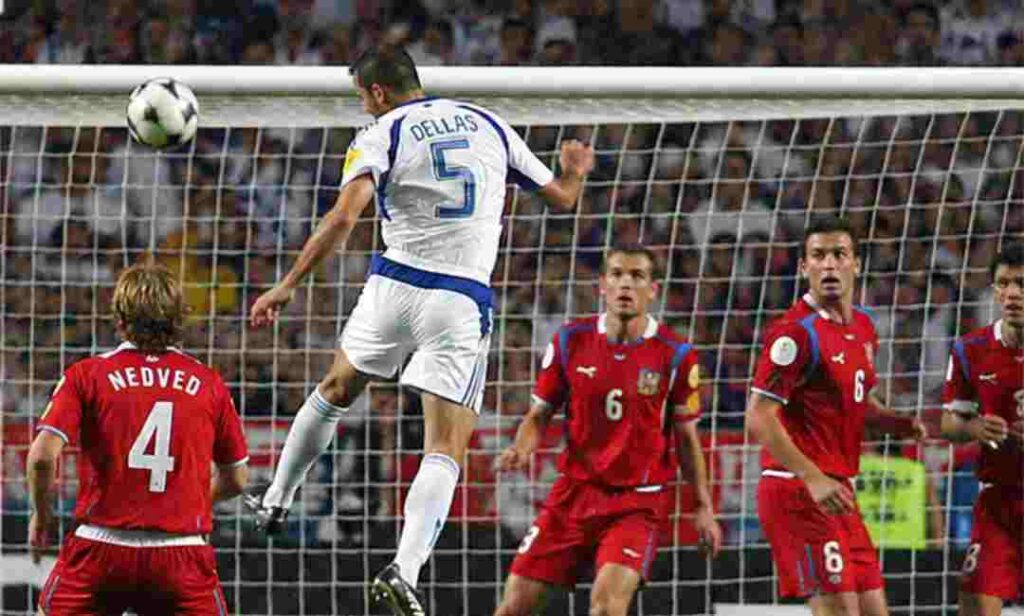
As the first period of extra time entered stoppage time, center-back Traianos Dellas scored for Greece with a header. The goal came just before the period ended, leaving the Czech Republic almost no time to organize a counterattack.
When the referee blew the whistle at the end of the first period of extra time, Greece was declared the 1-0 winner under the silver goal rule and advanced to the final. This became the most famous moment associated with the special rule at a major tournament.
Fans searching for truc tiep bong da hom nay are unlikely to encounter a similar scenario because the silver goal rule is no longer used in modern official competitions.
Why Was the Silver Goal Rule Abolished?
After understanding what the silver goal rule is, many people wonder why a seemingly reasonable rule lasted for such a short time. The main reason was that it did not produce the positive effects that had been expected.
UEFA’s original goal was to reduce the suddenness of the golden goal. However, the silver goal still placed enormous psychological pressure on teams near the end of the first period of extra time.
The leading team often committed many players to defense to protect the score. Conversely, the trailing team had to send its entire lineup forward. As a result, the match could easily become unbalanced, tense, and lacking in its natural flow.
In addition, the existence of several ways to determine a winner made matches difficult for viewers to follow. The golden goal, silver goal, traditional extra time, and penalty shootouts created a relatively complicated system.
UEFA decided to end the use of both the golden goal and silver goal after EURO 2004. The decision took effect on Jul 5, 2004, one day after that year’s European Championship final.
The decisive aerial duel in extra time, illustrating the tension when the silver goal rule was applied
How Is Extra Time Applied Today?
In modern football, the question of what the silver goal rule is is mainly of historical interest. When a knockout match ends level after 90 minutes, the teams generally have to play both periods of extra time in full, each lasting 15 minutes.
Whether a team scores in the first or second period of extra time, the match continues until time expires. The trailing team has an opportunity to equalize, while the leading team can search for additional goals to strengthen its advantage.
If the score remains level after 120 minutes, the teams enter a penalty shootout. Each team takes five initial kicks. If no winner has been determined, the shootout continues one kick at a time until a difference emerges.
Before choosing a match to watch on Vebo, viewers can check lịch thi đấu bóng đá to see whether the game is in the group stage or a knockout round. This helps them anticipate whether extra time and a penalty shootout may occur.
The Significance of the Silver Goal Rule in Football
Although it did not last long, the question of what the silver goal rule is remains an interesting part of the development of football’s laws. The rule shows that football organizations continually experimented to find a more exciting, fair, and easy-to-understand way of deciding winners.
The silver goal rule also created one of the most memorable moments in EURO history. Dellas’s goal not only sent Greece to the final but also became a defining symbol of the team’s astonishing journey to the championship.
Through platforms such as Vebo TV, fans can follow modern football while also rediscovering classic matches that once used special rules.
The Greek national team celebrates victory after the historic moment associated with the silver goal rule
Conclusion
In summary, what is the silver goal rule can be understood as a rule that allowed a match to end if one team was leading after the first period of extra time. The trailing team did not lose immediately after conceding, but it had only until the end of that first period to equalize.
Although it was once expected to become a reasonable alternative to the golden goal rule, the silver goal rule revealed many limitations and was abolished by UEFA after EURO 2004. Today, this rule is no longer used, but it is still remembered as a unique experiment that helped create unforgettable stories in the history of the world’s most popular sport.